
At Anand Liners, our Manufacturing Process ensures precision and quality in every product. From raw material selection to final testing, we utilize advanced technologies and strict quality controls. This ensures our engine parts meet global standards and exceed customer expectations.

High-quality cast iron is used as the primary raw material in the centrifugal casting process. Carefully selected grades of pig iron, steel scrap, and alloying elements are melted in a controlled furnace to achieve the required chemical composition and mechanical properties.
The molten metal is purified and treated to ensure uniformity, strength, and durability. This results in cast iron with excellent wear resistance, hardness, and structural integrity—ideal for high-performance components like cylinder liners.

Melting is one of the beginning prominent processes of the casting. Due care is taken while melting like charge preparation as per customers material specification requirements. The first step in the process is to collect and sort the cast iron scrap, Pig Iron and other materials and alloys that will be used to make the cylinder liner. These materials are then loaded into a furnace, which heats them to high temperatures until they become molten. Generally, cast iron is melted at temperatures between 1200°C and 1400°C (2192°F to 2552°F) in a furnace, which is hot enough to melt the iron and any other alloying materials that are added to it. The exact melting temperature can also depend on the specific grade of cast iron used, as different grades of cast iron have varying compositions and properties. For example, grey cast iron typically has a lower melting temperature than ductile cast iron, due to its higher carbon content.
In addition to the melting temperature, the casting process also involves controlling the cooling rate of the molten cast iron to ensure that the cylinder liner has the desired properties and characteristics. This can involve using different cooling rates or additives to adjust the microstructure of the cast iron and improve its strength and wear resistance.
At Anand Liners we have five 500 kg medium frequency induction furnaces, our production capacity is 250,000 pcs (1050 MT tonnes) per month.
The mold for the cylinder liner is made from a cylindrical steel shell that has a diameter slightly larger than the desired finished diameter of the liner. The inner surface of the shell is coated with a refractory material to prevent the molten metal from sticking to it.
The mold is then preheated to a specific temperature, typically between 200°C to 300°C (392°F to 572°F), to help prevent the molten cast iron from cooling too rapidly and to promote a better surface finish and micro structure.
The mold is then rotated at high speeds, usually around 900-1500 rpm, around its horizontal axis while the molten metal with temperature between 1200°C to 1400°C (2192°F to 2552°F),is poured into it through a sprue. The centrifugal force created by the rotation of the mold forces the molten metal to spread evenly along the inner surface of the mold, forming a cylinder shape. Centrifugal force: The centrifugal force created by the rotation of the mold forces the molten metal to spread evenly along the inner surface of the mold. As the mold continues to rotate, the molten metal solidifies and forms a solid cylinder shape with a uniform wall thickness.
As the mold continues to rotate, the molten metal cools and solidifies, forming a solid cylinder shape. The rotation of the mold ensures that the solidified metal has a uniform thickness along the entire length of the cylinder.
After the metal has solidified, the mould is stopped and the cylinder liner is removed from the mold. Any excess metal, such as the sprue or gating system, is removed by cutting or machining. The cylinder liner may then undergo further machining processes.
The centrifugal casting process offers several advantages over other casting methods, such as a more uniform distribution of material, reduced porosity, and improved mechanical properties. It is often used in the production of high-quality cylinder liners for various applications such as engines, compressors, and pumps.


The cylinder liner is prepared by cleaning it thoroughly to remove any dirt, debris, or residual coatings using shot blasting machines. The liner is then clamped securely in a fixture or chuck.
A roughing tool is used to remove a small amount of material from the surface of the liner, typically around 0.5mm to 1.0mm to prepare it for proof machining. This rough machining step helps to ensure that the liner is symmetrical and centered. The whole Machining process is done using the VTL (SPM) Machines,
Proof machining is an important step in the manufacturing of cylinder liners as it helps to ensure that the final product meets the required dimensions and tolerances. By verifying the dimensions before proceeding with final machining, manufacturers can save time and materials by avoiding the need for costly rework.


Fine boring is a process used to create a precise and accurate cylindrical hole with a smooth surface finish. In the manufacturing of cylinder liners, fine boring is used as a finishing operation to achieve the final dimensions and surface finish of the liner bore.
At Anand Liners fine boring process involves the following steps:

The cylinder liner is mounted securely in a fixture, and the boring machine is adjusted to ensure that the liner is properly aligned and centered.
Fine boring is a critical process in the manufacturing of cylinder liners, as it helps to ensure that the liner bore has the precise dimensions and surface finish required for proper function and durability. By using advanced cutting tools and precise machining techniques, manufacturers can produce cylinder liners with excellence.
The final CNC outer diameter process is the last step in the manufacturing of cylinder liners. This process involves using a CNC (Computer Numerical Control) machine to achieve the final outer diameter and surface finish of the cylinder liner.
At Anand Liners CNC process typically involves the following steps:


The CNC outer diameter process is a critical step in the manufacturing of cylinder liners as it helps to ensure that the final product has the precise dimensions and surface finish required for proper function and durability. By using advanced CNC machines and precise cutting tools, we are able to produce cylinder liners with excellent accuracy and surface finish.
The final grinding outer diameter for dry cylinder liners is done using a centerless grinding machine. We do grinding using a centerless grinding machine to achieve the final outer diameter and surface finish of the cylinder liner.
At Anand Liners final grinding outer diameter process using centerless grinding typically involves the following steps:


Plateau honing is a precision honing process used in the manufacturing of cylinder liners to achieve a specific surface finish and geometry on the liner’s bore. We bore the liner’s bore using a set of honing stones (Dimond) that are specifically designed for the plateau honing process. At Anand Liners plateau honing process involves the following steps:
The plateau honing process is a critical step in the manufacturing of cylinder liners, as it helps to achieve the required surface finish and geometry on the liner’s bore surface. The process is highly precise and requires specialized equipment and skilled operators to ensure that the final product meets the required specifications.


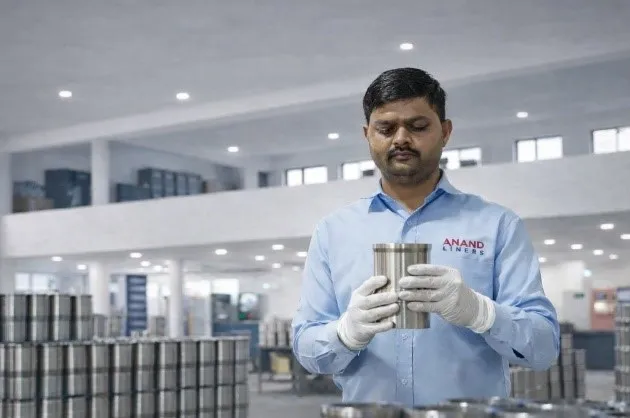
In final inspection stage we maintain & checked all parameter as per standard drawing. We have Digital micrometers, Digital vernier , Boregauge, Roundnesstester & pneumatic Plug gauge, pneumatic ring gauge which fullfill the final inspection criteria.


ANAND LINERS (INDIA) PVT. LTD.
Veraval (Shapar), Anand Liners Gate, Rajkot – 360024, Gujarat – India.
At Anand Liners, we believe that long-term success is built on trust, quality, and customer satisfaction. Our customer-focused approach, technical support, and commitment to delivering reliable solutions continue to make us a preferred global partner in the engine components and casting industry.

You cannot copy content of this page
Javascript not detected. Javascript required for this site to function. Please enable it in your browser settings and refresh this page.
